In senior living, language shapes how we design experiences for residents and the ways they can grow, connect, and find purpose. For years, “wellness” has served as a guiding principle—focused on physical health, disease prevention, and fitness. But as resident expectations evolve, a new term is emerging at the forefront of senior living design: wellbeing.
While the two words are often used interchangeably, their meanings and impacts are distinct. Wellness tends to address the body. Wellbeing encompasses the whole person, integrating purpose, connection, and fulfillment into daily life. Understanding the difference between wellness vs. wellbeing turns the focus from managing health to enriching the overall life experience.
Below, we explore the four key differences defining this evolution.
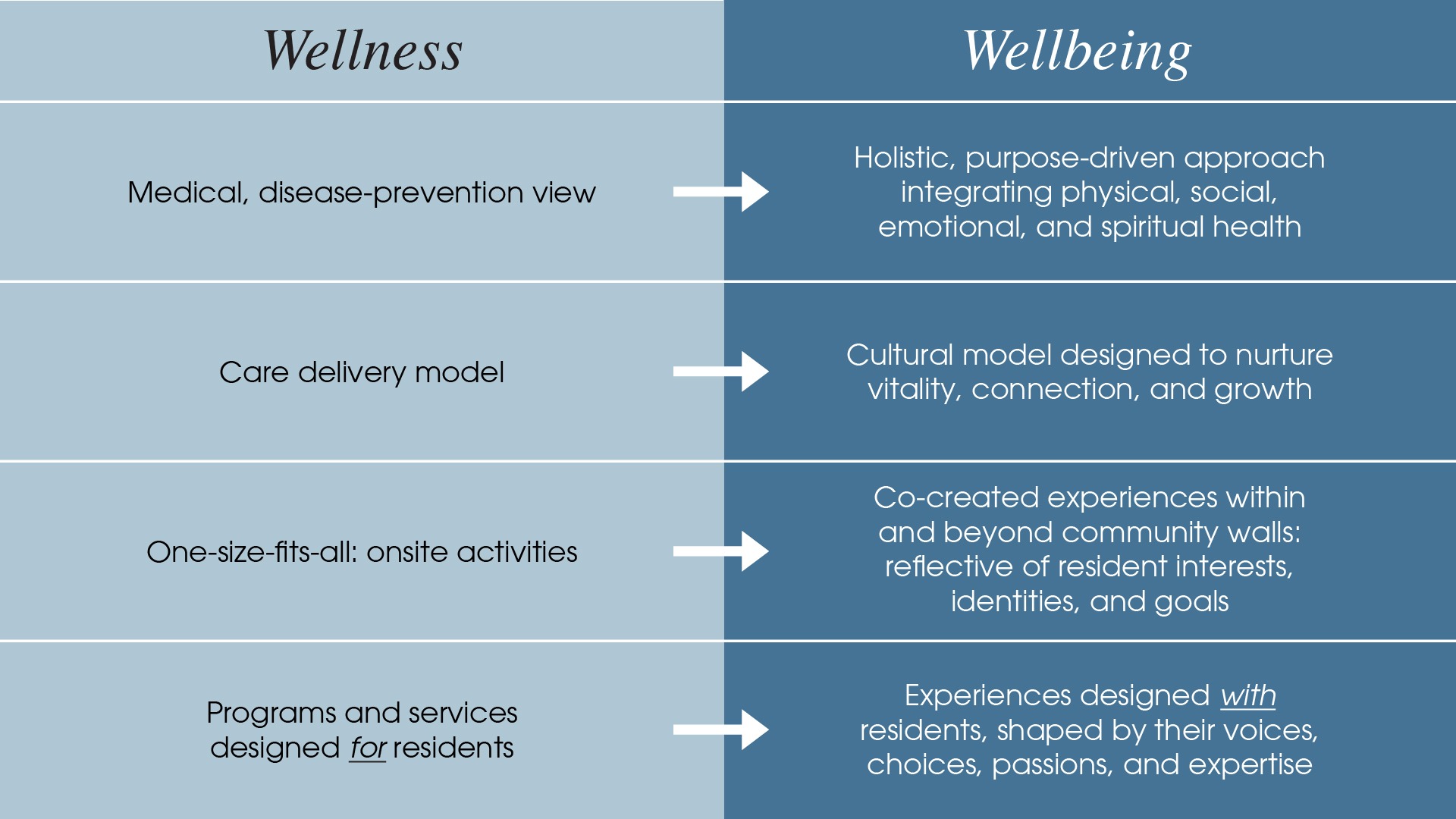
The language evolution of wellness vs. wellbeing reflects something larger happening across senior living: a redefinition of what it means to age well. Communities that prioritize wellbeing move beyond physical health to create spaces where residents thrive emotionally, socially, and spiritually.
In these environments, aging isn’t about preserving life as it was; it’s about discovering what’s next.
About CCL Hospitality Group
Browse Additional Resources

Rethinking the Senior Living Experience Without Major Investment
Keeping Wellbeing Impactful Without Raising Fees